
.png)

Interior Design Philosophy Don’t Design Spaces, I Translate People
- NADA RUSTOM
- Feb 27
- 2 min read

Updated: Mar 8

You can buy better furniture.
You can follow trends.
You can copy a Pinterest board down to the exact lamp.
And still feel like something is… off.
This article explores an interior design philosophy focused on identity, intention, and how spaces truly feel.
That’s because most spaces don’t fail due to bad design.
They fail because they have no point of view.
A room without a story is just a collection of objects trying to get along.
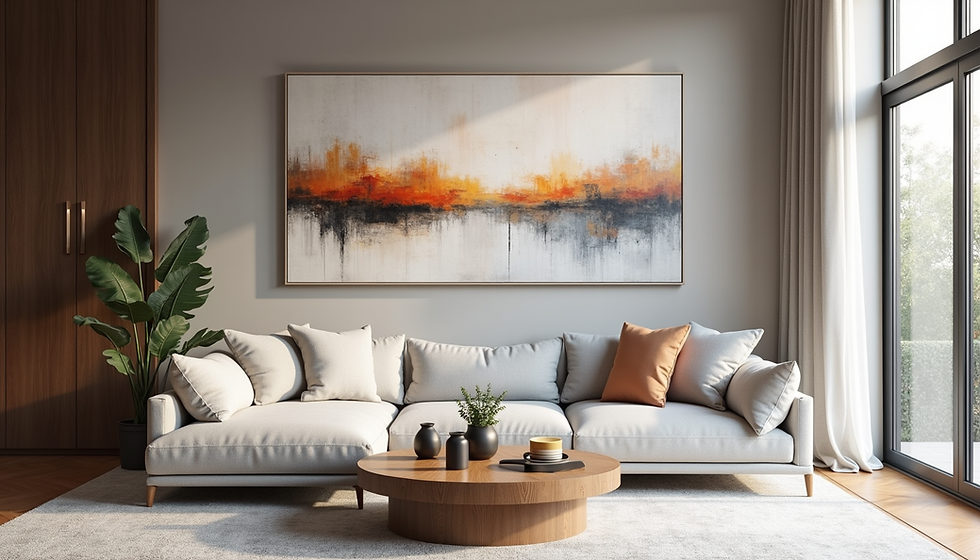
I see it all the time, perfectly styled homes that feel completely forgettable.
Neutral palettes, clean lines, expensive pieces… and zero personality.
It’s not that they’re ugly.
It’s that they don’t belong to anyone.
They could be yours.
They could be mine.
They could be a hotel lobby pretending to be a living room.
Real design starts when you stop asking:
“What looks good?”
and start asking:
“What feels like me?”
That question is uncomfortable.
Because it forces you to choose.
Not everything can stay.
Not every trend fits.
Not every “nice piece” deserves space in your life.
A strong interior is not balanced, it’s intentional.
It has tension.
It has contrast.
It has something slightly unexpected that makes you pause.
That’s where identity lives.
As a designer, I don’t just arrange furniture.
I translate people into space.
And the truth is,most people have never actually defined their own aesthetic.
They’ve just collected influences.
But influence is not identity.
Your home should not impress strangers.
It should recognize you.
The moment you walk in and feel understood by your own space,
that’s when design finally works.
If your space feels “almost right,” don’t rush to replace things.
Pause.
Look around.
And ask yourself the only question that matters:
Does this space tell my story, or someone else’s?
NADA RUSTOM


Comments