
.png)

The Ultimate Wall Art Size Guide for Every Room: Elevate Your Space with Perfect Dimensions
- NADA RUSTOM
- May 29
- 4 min read

Choosing the right wall art size transforms a room from ordinary to extraordinary. When wall art is too small, it feels lost and disconnected from the furniture. If it’s too large, it overwhelms the space, making the room feel cramped or chaotic. This balance is essential for creating interiors that feel cohesive, elegant, and thoughtfully designed. This wall art size guide offers precise, practical advice for selecting the perfect dimensions for every room, ensuring your art enhances your home’s style and scale.

Living Room Wall Art Size Guide
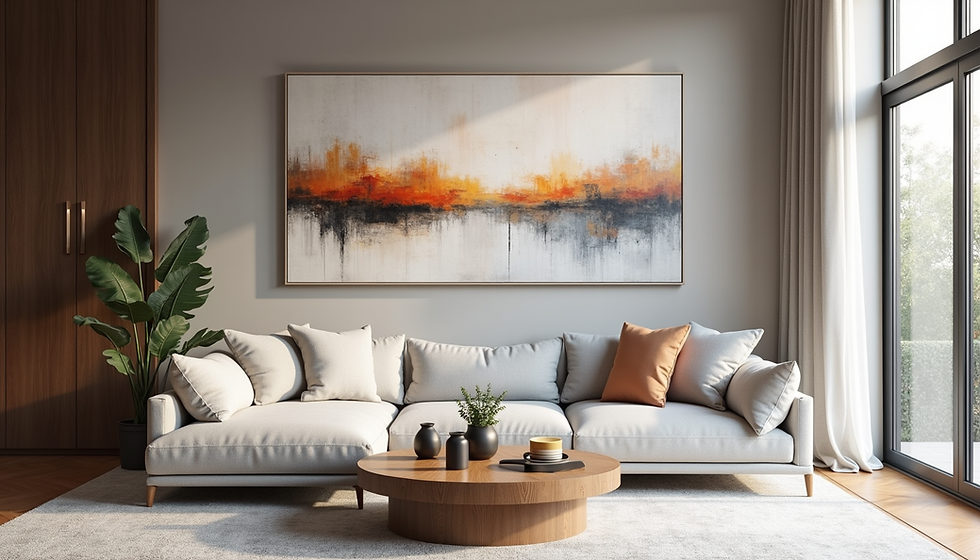
The living room is often the heart of the home, where wall art must complement furniture without overpowering it. The key formula for wall art size above a sofa is to cover 60 to 75% of the sofa’s width. For example, if your sofa is 84 inches (213 cm) wide, the ideal artwork width ranges between 50 to 63 inches (127 to 160 cm).
Recommended Artwork Sizes for Living Rooms
Medium sofa (72 inches / 183 cm wide): Art width 43 to 54 inches (110 to 137 cm)
Large sofa (90 inches / 229 cm wide): Art width 54 to 68 inches (137 to 173 cm)
Extra-large sofa (108 inches / 274 cm wide): Art width 65 to 81 inches (165 to 206 cm)
Height depends on the art style but generally ranges from 24 to 48 inches (61 to 122 cm) to maintain balance.
Large Statement Art vs Gallery Layouts
Large wall art sizing creates a bold focal point, ideal for minimalist or modern interiors. A single piece sized to the sofa’s width anchors the space elegantly. Alternatively, a gallery layout with multiple smaller pieces arranged in a grid or salon style can fill the same width but requires careful spacing—typically 2 to 4 inches (5 to 10 cm) between frames.
Spacing Between Sofa and Artwork
Maintain 6 to 12 inches (15 to 30 cm) of vertical space between the top of the sofa and the bottom of the artwork. This spacing creates a visual connection without crowding.
Bedroom Wall Art Size Guide
Wall art above the bed sets the tone for the bedroom’s style and scale. The ideal width of the artwork should be two-thirds to three-quarters of the bed’s width.
Above-Bed Sizing Examples
Queen bed (60 inches / 152 cm wide): Art width 40 to 45 inches (102 to 114 cm)
King bed (76 inches / 193 cm wide): Art width 50 to 57 inches (127 to 145 cm)
Small bedroom (full bed, 54 inches / 137 cm wide): Art width 36 to 40 inches (91 to 102 cm)
Height should be proportional, typically 24 to 36 inches (61 to 91 cm), depending on ceiling height and wall space.
Symmetry and Placement Rules
Center the artwork horizontally with the bed frame or headboard. For symmetrical bedside tables and lamps, a single large piece or a balanced pair of artworks works best. Avoid pieces that extend beyond the bed’s width to maintain harmony.
Dining Room Wall Art Size Guide
Dining rooms benefit from art that complements the table or buffet without overwhelming the space.
Correct Sizing for Walls Above Buffets and Dining Tables
Artwork should be 50 to 60% of the furniture width. For example, a buffet 72 inches (183 cm) wide calls for art 36 to 43 inches (91 to 109 cm) wide.
Proportion Rules
Height should be about two-thirds the height of the furniture below it. For a buffet 36 inches (91 cm) tall, artwork height should be 24 inches (61 cm).
Oversized vs Small Artwork
Oversized art can create drama but risks overpowering the dining area if ceilings are low. Smaller, well-placed pieces or a series of coordinated artworks maintain elegance and visual interest.

Hallway and Entryway Guide
Hallways and entryways often have narrow walls requiring vertical or slim horizontal art.
Vertical vs Horizontal Artwork
Vertical pieces emphasize height and work well in tight spaces. Horizontal art suits wider walls but should not extend beyond 60% of the wall width.
Narrow Wall Solutions
Use slim, tall artworks or a vertical gallery wall with consistent spacing of 3 to 5 inches (7.5 to 12.5 cm) between frames to avoid clutter.
Gallery Spacing Rules
Maintain uniform spacing between pieces, ideally 2 to 4 inches (5 to 10 cm), to create a cohesive flow.
Home Office Wall Art Guide
Art in productivity spaces should inspire without distraction.
Best Artwork Sizes for Productivity Spaces
Choose pieces that are 24 to 36 inches (61 to 91 cm) wide for desks up to 60 inches (152 cm). Keep height moderate, around 18 to 24 inches (46 to 61 cm).
Scale Recommendations
Avoid oversized art that dominates the room. Instead, opt for medium-sized pieces or a small gallery wall to balance focus and creativity.

Designer Tips for Wall Art Sizing
Oversized wall art creates impact but requires ample wall space and ceiling height.
Triptych artwork should have panels sized to collectively cover 60 to 75% of furniture width, with 2 to 4 inches (5 to 10 cm) spacing between panels.
Gallery wall proportions work best when the total layout covers 60 to 75% of the wall or furniture width.
In small rooms, choose art that fits the scale of furniture and walls to avoid overwhelming the space.
In large rooms, larger or multiple pieces can fill the space without feeling sparse.
Common Sizing Mistakes to Avoid
Choosing art too small for the wall, which makes the space feel empty and unfinished.
Hanging art too high or too low, disrupting the visual connection with furniture. The center of the artwork should be at eye level, approximately 57 to 60 inches (145 to 152 cm) from the floor.
Ignoring spacing guidelines between furniture and art, which can make the room feel disconnected or cluttered.


Comments